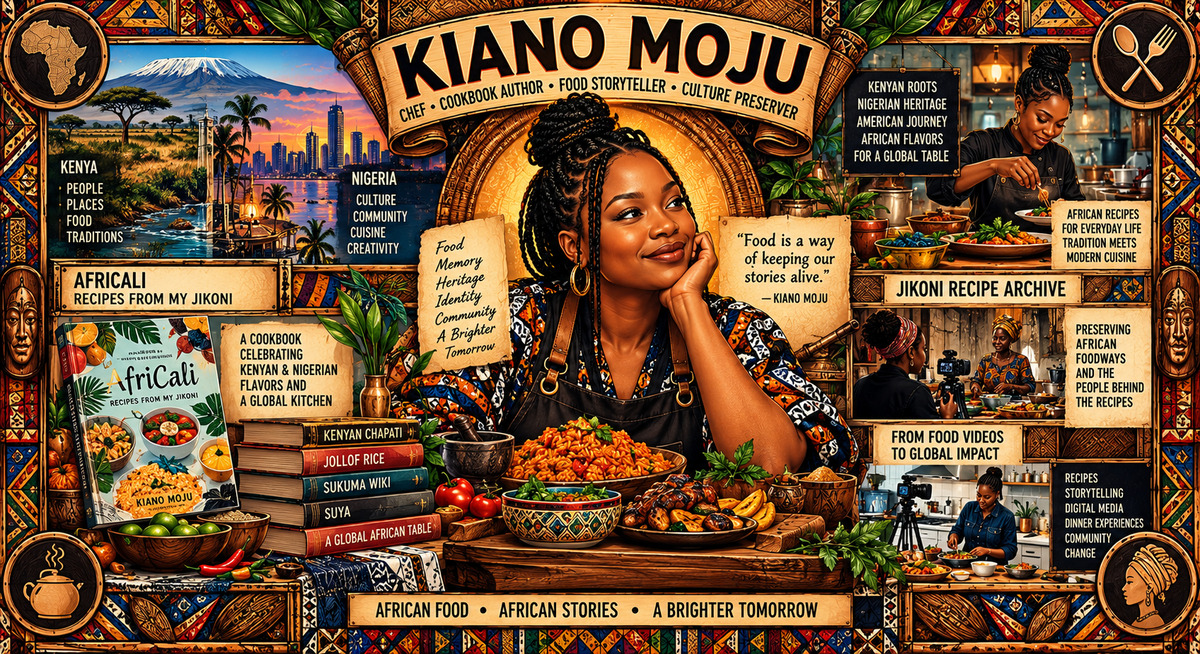
African food is much more than what appears on a plate. Behind many recipes are memories of family, migration, community and traditions passed from one generation to another.
Kiano Moju understands this connection particularly well.
The Kenyan-Nigerian-American chef, cookbook author and food creator has built a career around sharing African flavors while documenting the people and traditions behind them.
From creating viral food videos to publishing her cookbook AfriCali and establishing an archive dedicated to African foodways, Kiano is helping make African cuisine more accessible without separating it from the cultures that created it.
Who Is Kiano Moju?
Kiano Moju is a Kenyan, Nigerian and American chef, cookbook author, recipe developer, producer and food advocate.
Her culinary identity reflects several worlds. Her Kenyan and Nigerian heritage influences her cooking, but so does growing up in California and travelling internationally based on story from Worlds of Flavor
This mixture eventually became central to the way she approaches food.
Rather than treating African cuisine as something unfamiliar or exotic, Kiano encourages people to see African ingredients and flavors as food they can incorporate into everyday cooking.
You can learn more about her work on the Kiano Moju official website.
From Food Videos to Building Her Own Platform
Before developing her own culinary projects, Kiano worked at Tasty, BuzzFeed’s food-video platform.
According to her professional biography for the Culinary Institute of America’s Worlds of Flavor, she worked as a creative video producer there until 2019, with her recipe content accumulating more than 100 million video views according to Worlds of Flavor
Her experience in food media became useful when she decided to build something of her own.
Instead of focusing solely on becoming an online personality, Kiano turned her attention toward documenting and preserving African food traditions.
The Jikoni Recipe Archive
One of Kiano’s most interesting projects is the Jikoni Recipe Archive, a nonprofit created to preserve and share culinary knowledge from Africa and its diaspora.
The archive documents both traditional and contemporary cooks while celebrating the people responsible for carrying recipes from one generation to another.
This work matters because recipes can disappear when they exist primarily through oral traditions and family knowledge.
A grandmother may know exactly how much spice belongs in a stew without ever measuring it. A mother may teach her daughter by asking her to stand beside the pot and watch. Eventually, those small pieces of culinary knowledge can become difficult to recover.
Kiano’s work recognizes that preserving African food also means preserving the stories of the people who cook it.
This is something we celebrate throughout the African Food section on Miangos, where African women are using food to preserve and share their cultures.
AfriCali: Recipes From My Jikoni
Kiano expanded her work with the publication of her debut cookbook, AfriCali: Recipes From My Jikoni.
The cookbook draws particularly from her Kenyan and Nigerian heritage, while also reflecting the California environment in which she grew up.
Kiano has explained that the goal is not simply to create “fusion” food. Instead, she wants African flavors to feel accessible enough to become part of people’s everyday cooking as mentioned on her LinkedIn profile
Recipes associated with AfriCali include dishes and ideas such as jollof rice, garlic-butter chapati, seafood pilau, suya-inspired lamb and an AfriCali interpretation of the East African Rolex.
You can explore more of her dishes through Kiano Moju’s recipe collection.
Celebrating Both Kenyan and Nigerian Food
One thing that makes Kiano’s culinary identity especially interesting is that she doesn’t have to choose between her different cultural influences.
East and West Africa both appear in her food.
Her recipe collection includes Kenyan chapati, sukuma wiki, Swahili chicken biryani and njahi, alongside dishes influenced by jollof, suya and Nigerian meat pies.
That makes her work a useful introduction to just how diverse African cuisine actually is.
There is no single “African food.”
Ingredients, cooking methods and eating traditions can change dramatically between countries—and even between communities within the same country.
Kiano’s cooking allows those differences to exist while finding creative ways to bring them together.
Jikoni: Bringing the Cookbook to the Table
Kiano has also taken her culinary ideas beyond books and videos.
She is the chef-owner of Jikoni, a private dining space in Beverly Hills where she hosts dinner parties inspired by AfriCali.
The name itself is meaningful: “jikoni” means “kitchen” in Swahili.
This gives people an opportunity to experience the food rather than simply reading about it or watching it online.
Why Kiano Moju Matters
Kiano’s contribution goes beyond developing interesting recipes.
She is helping change the way African food is documented and presented.
Her work shows that preserving traditional cuisine doesn’t mean refusing to experiment with it. Heritage can provide the foundation while cooks continue creating something new.
That philosophy connects her with other women already featured on Miangos.
Ghanaian chef Selassie Atadika similarly uses indigenous African ingredients while exploring contemporary gastronomy. Miangos
Cameroonian food creator Precious Nkeih has used her digital platform to make traditional Cameroonian recipes easier for people around the world to prepare. Miangos
And your African Food collection includes other women preserving African culinary heritage in very different ways. Miangos
Kiano adds another perspective to that growing collection: the experience of an African woman whose food identity crosses countries, continents and generations.
Final Thoughts
Kiano Moju’s journey shows how food can connect people to places they may have left—or places they have never visited.
Her Kenyan and Nigerian heritage, California upbringing and experience in digital media have helped her create a culinary voice that feels both rooted and international.
Through AfriCali, her recipes, Jikoni and the Jikoni Recipe Archive, she isn’t simply introducing people to African dishes.
She is helping preserve the stories, techniques and people behind African food while inviting a new generation to bring those flavors into their own kitchens.
For Miangos, that makes Kiano Moju another African woman worth celebrating.
Follow Kiano Moju
Visit Kiano Moju’s official website to explore her cookbook, recipes and culinary projects.
You can also browse her online recipe collection for dishes inspired by African cuisines and her wider culinary experiences.
Leave a Reply