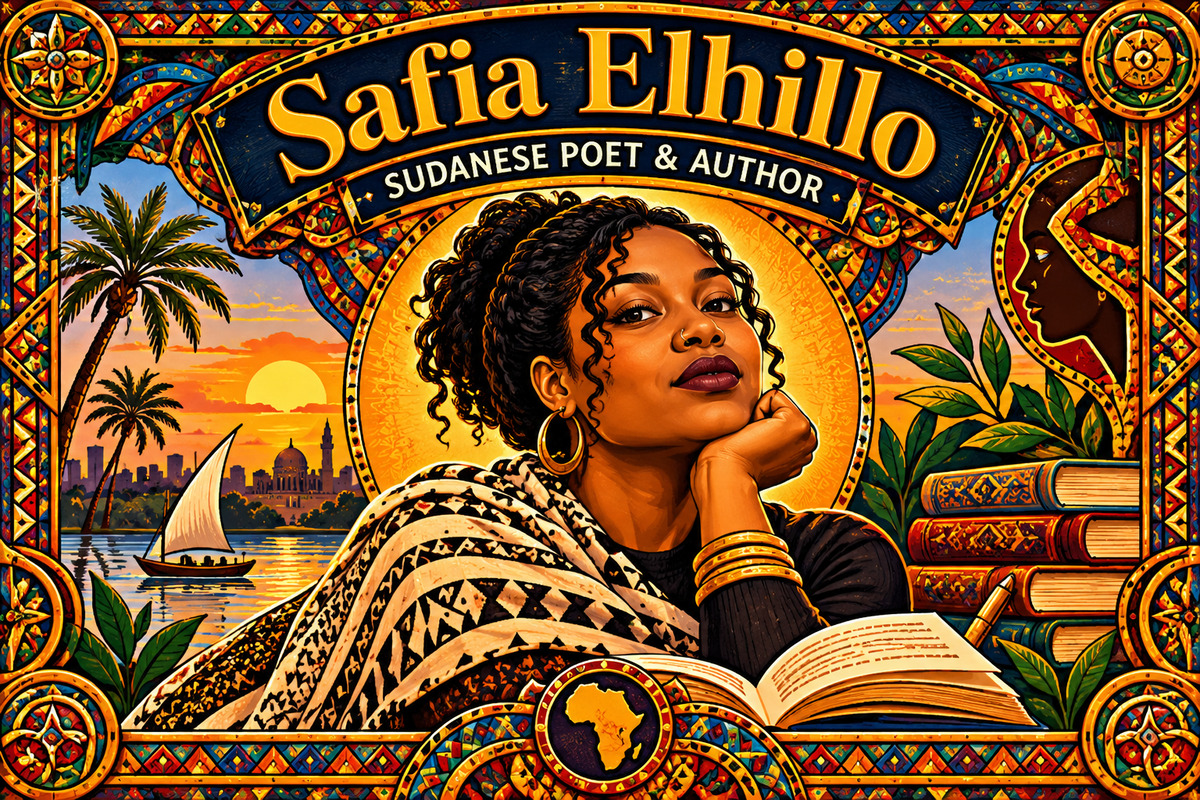
African poetry continues to introduce powerful female voices to readers around the world. One of these voices is Safia Elhillo, a Sudanese-American poet and author whose writing explores cultural identity, migration, womanhood and belonging.
Known for her poetry collection The January Children and her novel in verse Home Is Not a Country, Elhillo has received several literary awards and international recognition.
Through her work, she gives readers a closer look at the experiences of African women navigating different cultures, languages and expectations.
Who Is Safia Elhillo?
Safia Elhillo is a Sudanese-American poet and writer raised in Washington, D.C., with strong connections to her Sudanese heritage.
She earned her bachelor’s degree from New York University’s Gallatin School of Individualized Study and an MFA in poetry from The New School.
Her experiences growing up between Sudanese and American cultures have influenced her writing, particularly her exploration of language, identity and displacement.
Learn more about her background through the Academy of American Poets and National Book Foundation.
Academy of American Poets+2
The Breakthrough: The January Children
Elhillo gained significant literary recognition with her debut poetry collection, The January Children, published in 2017.
The collection explores Sudanese identity, migration, family history and the complicated experience of belonging to more than one culture.
Its title refers to a generation of Sudanese people whose birthdays were officially recorded as January 1 when their exact birth dates were unknown.
The collection received the Sillerman First Book Prize for African Poets and an Arab American Book Award.
These achievements helped establish Elhillo as an important voice in contemporary African poetry.
Read more about Safia Elhillo at the Poetry Foundation.
The Poetry Foundation+1
Home Is Not a Country
In 2021, Elhillo published Home Is Not a Country, a young adult novel written in verse.
The story follows Nima, a Sudanese-American teenager struggling with identity, family relationships and the feeling that she does not fully belong anywhere.
Through Nima’s experiences, Elhillo explores the emotional challenges of growing up between cultures.
The book was longlisted for the 2021 National Book Award for Young People’s Literature and received a Coretta Scott King Author Honor.
Read more about the book on the National Book Foundation website.
National Book Foundation+1
Other Books by Safia Elhillo
Elhillo has continued publishing poetry and fiction that explore women’s experiences, identity and cultural expectations.
Her notable works include:
-
The January Children (2017) — A poetry collection exploring Sudanese identity and displacement.
-
Halal If You Hear Me (2019) — A poetry anthology co-edited with Fatimah Asghar.
-
Home Is Not a Country (2021) — A young adult novel in verse about identity and belonging.
-
Girls That Never Die (2022) — A poetry collection examining womanhood, violence, survival and the female body.
-
Bright Red Fruit (2024) — A young adult novel in verse exploring family relationships, creativity and a young woman’s independence.
You can explore her published works through the Poetry Foundation and Academy of American Poets.
The Poetry Foundation+2
Safia Elhillo’s Writing Style
Elhillo’s poetry combines personal experiences with larger questions about culture, language and identity.
Her work frequently addresses:
-
African and Arab identity
-
Migration and displacement
-
Womanhood and gender expectations
-
Family relationships
-
Cultural belonging
-
Memory and language
One distinctive feature of her writing is her exploration of what it means to belong to different cultural worlds simultaneously.
Rather than presenting identity as something fixed, Elhillo examines how it changes through language, family history and personal experiences.
Her poems also draw on contemporary spoken-word traditions, making her writing especially engaging for younger audiences.
Awards and Achievements
Safia Elhillo has received several literary honors, including:
-
Brunel International African Poetry Prize (2015)
-
Sillerman First Book Prize for African Poets
-
Arab American Book Award
-
Ruth Lilly and Dorothy Sargent Rosenberg Poetry Fellowship
-
Wallace Stegner Fellowship at Stanford University
-
Coretta Scott King Author Honor
-
California Book Award
-
Forbes Africa 30 Under 30 (2018)
-
National Book Award longlist (2021)
Her work has also appeared in international literary publications and has been translated into several languages.
Learn more about her achievements through Stanford University’s Creative Writing Program.
The Poetry Foundation+2
Why Safia Elhillo Matters
Safia Elhillo represents a generation of African female poets using literature to explore experiences that are sometimes overlooked.
Her writing gives attention to African women growing up in the diaspora, particularly those navigating questions of identity, family expectations and cultural belonging.
Through her poetry and novels in verse, she also demonstrates that African literature can reach younger readers while addressing important social issues.
Her achievements continue to create visibility for Sudanese writers and African women in international literature.
Final Thoughts
Safia Elhillo has established herself as an influential contemporary African poet through her thoughtful exploration of identity, migration and womanhood.
From The January Children to Bright Red Fruit, her work demonstrates the power of poetry to connect personal experiences with wider cultural conversations.
Her journey is another example of how African women are contributing to global literature while preserving their unique cultural perspectives.
Readers interested in African female poets and contemporary African literature will find much to appreciate in her work.
Leave a Reply